What To Bring On An NYC Christmas Lights Tour
The difference between a magical lights tour and a miserable one is rarely the lights. It is the shoes, the layers and the bag. Here is what actually matters to carry on a New York Christmas tour, section by section.
Short answer
Bring warm layers, waterproof shoes with real grip, thin gloves you can use a phone through, a small cross-body bag, a portable charger and a water bottle. Self-guided Dyker Heights is free, the "4-Hour Bus Tour, Hotel Pickup" runs from $45 and the "Horse-Drawn Carriage Lights Ride" from $240, so the packing list, not the ticket, is where most comfort is won.
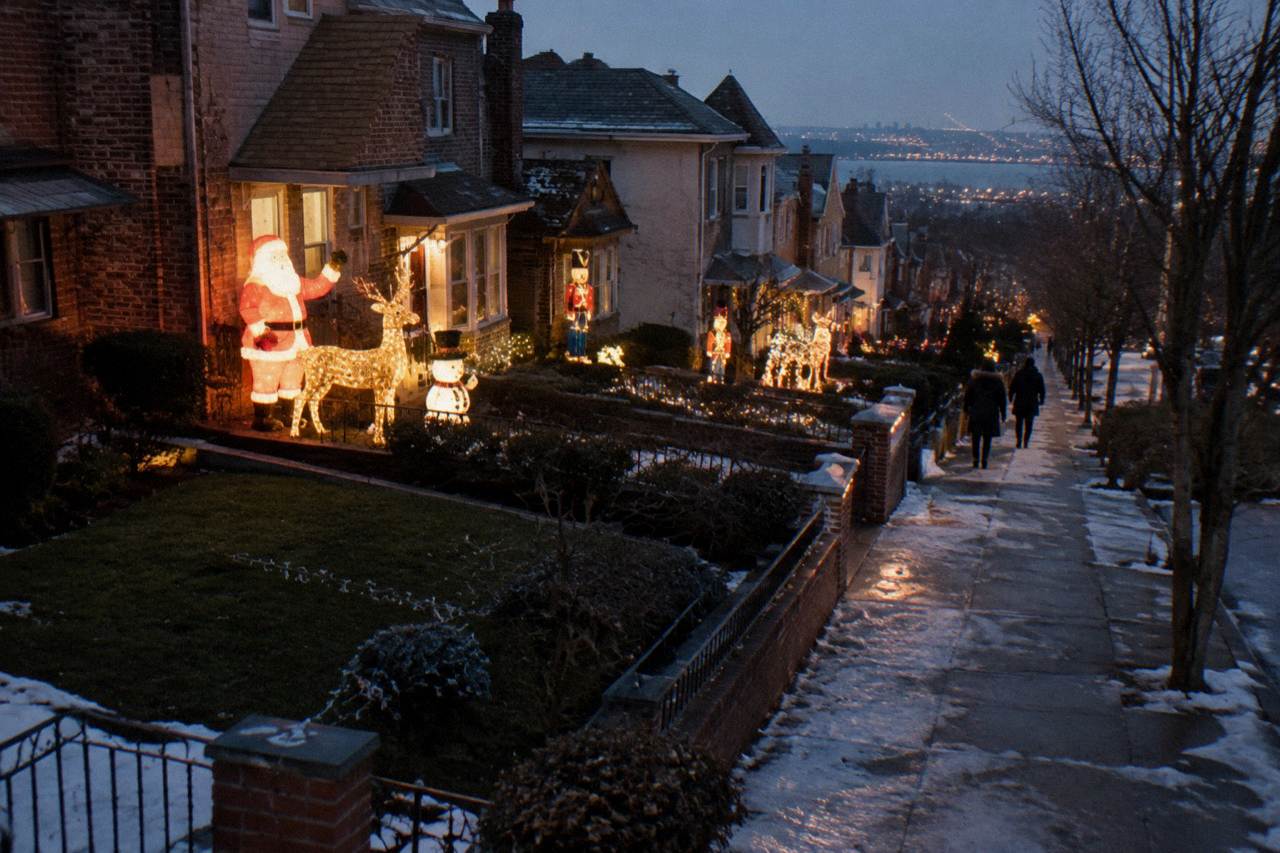
A Christmas lights tour in New York is an outdoor, after-dark, standing-heavy event, and the city does not soften for visitors. The Dyker Heights displays sit on ordinary residential streets in Brooklyn, where the only shelter is the shadow between two lit houses. Midtown rides and rinks are warmer propositions but still demand hours outside. What separates the travelers who finish the route smiling from the ones who peel off early is almost never the itinerary. It is the packing.
This guide breaks the list down by decision rather than by generic checklist: what the core kit is, how cold changes it, how the tour format changes it, what changes with kids, how to carry it all on the subway, what the extras cost, and what can safely stay home.
What Should You Pack For An NYC Christmas Lights Tour?
Pack in five groups: body layers from skin to shell, footwear with genuine grip, thin touchscreen gloves, a small bag that closes flat against you, and electronics, meaning a charged phone, a portable battery and a paper backup of your meeting point. Everything else is optional, and most of it is dead weight on a four hour walk. Guides hold flags, not luggage, and tours move at walking pace with no place to set a bag down.
The core kit earns its place because every product on the roster is an evening, outdoor activity. The "Dyker Heights Lights on Foot" tour, from $69 and rated 4.7 from 40 reviews, meets in Midtown and rides the subway out to Brooklyn with the group, so you are standing, riding and walking for the whole evening. The "4-Hour Bus Tour, Hotel Pickup", from $45 and rated 4.4 from 670 reviews, is warmer but still includes long stretches on foot in the display streets. Even the shortest options, like the "Horse-Drawn Carriage Lights Ride" at roughly 45 to 60 minutes from $240, expose you to open-air Midtown cold the entire time.
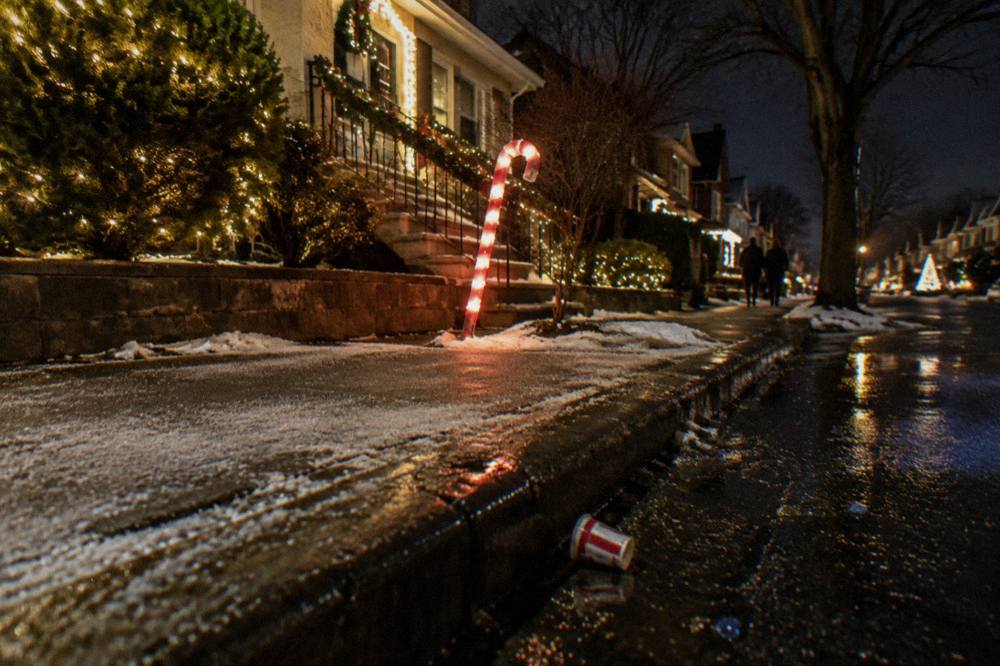
The list below is deliberately short. Every item solves a problem that actually occurs on these routes.
| Group | Items | Why it earns its place |
|---|---|---|
| Body | Base layer, insulating mid layer, windproof outer shell | You stand still for long stretches; wind off the avenues cuts through a single coat |
| Feet | Waterproof shoes or boots with real tread | Sidewalks in December are wet, slushy or icy by evening |
| Hands and head | Thin touchscreen gloves, warm hat, scarf | You will want photos constantly; bulky gloves make that impossible |
| Bag | Small cross-body or sling bag that zips shut | Subway crowds and packed display streets both punish open totes |
| Electronics | Phone, portable charger, cable | Tickets, meeting-point maps and photos all live on one battery |
| Backup | Paper note of the meeting point and start time | Phones die in cold faster than at home |
| Extras | Small water bottle, tissues, a few snacks | Long tour blocks with no convenient store stop |
One principle governs all of it: nothing you carry should require two hands. You will want one hand free for a railing on the subway, a hot drink, or a steadier phone grip in the dark. For a deeper dive on the clothing half of this list, the what to wear on a NYC lights tour guide handles fabrics and footwear in detail; this page keeps the wider view.
How Cold Does An NYC Christmas Tour Feel At Night?
Darkness drops the felt temperature fast, standing still drops it faster, and the Brooklyn display core sits blocks from the subway with no indoor waiting area, so plan for the coldest hour of your day, not the average December afternoon. Wind is the real variable: it turns a calm evening into a painful one within a block of walking. The fix is layers you can tune, not one heavy coat.
The tour roster's own policies hint at how seriously operators take the weather. The carriage ride lists free cancellation up to 24 hours before start, and separately runs a weather-dependent policy with rebooking or a refund if the operator cancels for weather. That is a practical signal: cold, rain and wind are common enough in November and December that a sightseeing product builds its refund logic around them.
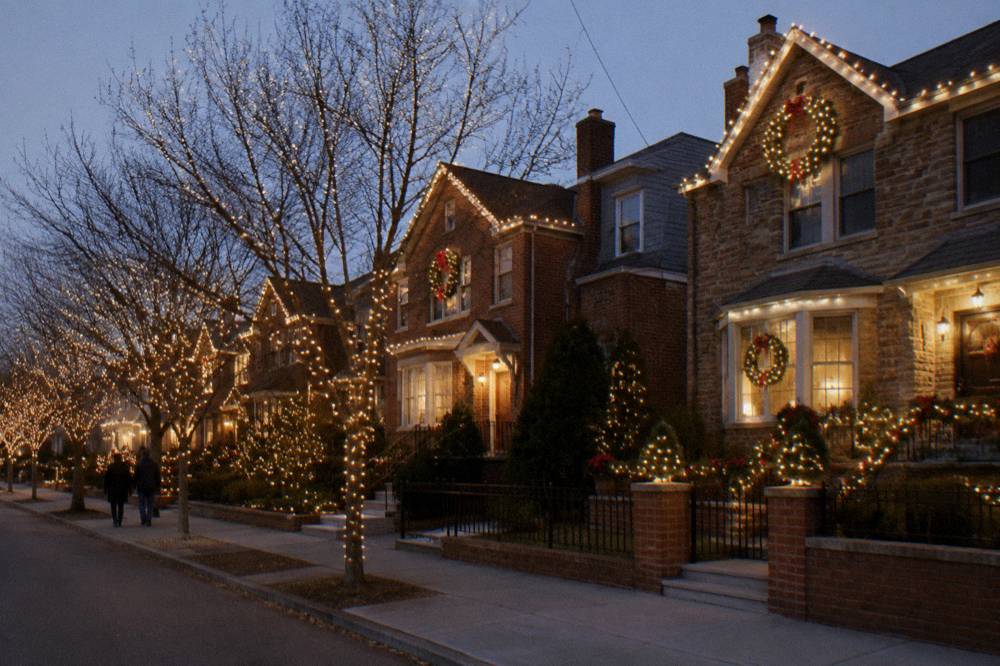
The lights themselves follow a schedule that shapes your coldest hours. In Dyker Heights, displays typically switch on around dusk, roughly 4:30 to 5 p.m., and many switch off around 9 p.m., with the busiest stretches on mid-December weekends between 5 and 9 p.m. Weeknights are generally quieter. If you would rather lean into a calm viewing window than fight the peak, the best time to see the Dyker Heights lights guide lays out the trade-offs.
| Layer | What it does | Example item | Packing mistake it prevents |
|---|---|---|---|
| Base | Moves sweat off skin | Synthetic or merino long-sleeve top | Cotton base that stays damp and chills you |
| Mid | Traps warm air | Fleece or light insulated jacket | One giant coat with no way to cool down indoors |
| Shell | Blocks wind and light rain | Windproof, water-resistant outer layer | Absent shell, so every gust ends the evening early |
| Extremities | Protects the parts that feel cold first | Hat, scarf, touchscreen gloves | Bare hands too numb to take a photo |
| Feet | Keeps grip and dryness | Waterproof boots with tread | Smooth-soled sneakers on wet sidewalks |
Test your gloves before you leave home: if you cannot unlock a phone and press the shutter while wearing them, they are the wrong gloves for this trip. The whole evening is photographs, and a lights tour where you cannot shoot the lights is a long walk in the cold for nothing.
Should You Pack Differently For A Walking Tour, Bus Tour Or Carriage Ride?
Yes, and the differences are bigger than the similarities. A walking tour rewards a light, tuned-for-motion kit; a bus tour lets you carry more and dress less; a carriage ride is a short, static, open-air sit, so warmth matters more than mobility. Match the bag to the format before you match the coat to the forecast. The wrong pairing is the most common packing failure on these routes.
Walking products are the most demanding. The "Dyker Heights Lights on Foot" tour, from $69, meets near Rockefeller Center and includes a subway ride to Brooklyn with the guide, duration on the listing. The "4-Hour Lights and Markets Walk", from $59 and rated 4.3 from 62 reviews, runs four hours from the Shops at Columbus Circle to Bryant Park. Four hours on pavement means blister supplies, truly broken-in shoes and nothing heavy on your shoulders. Bus formats flip the logic: the "4-Hour Bus Tour, Hotel Pickup" includes hotel pickup and four hours with a heated cabin between stops, so spare layers, a larger water bottle and even a book for the ride all make sense.
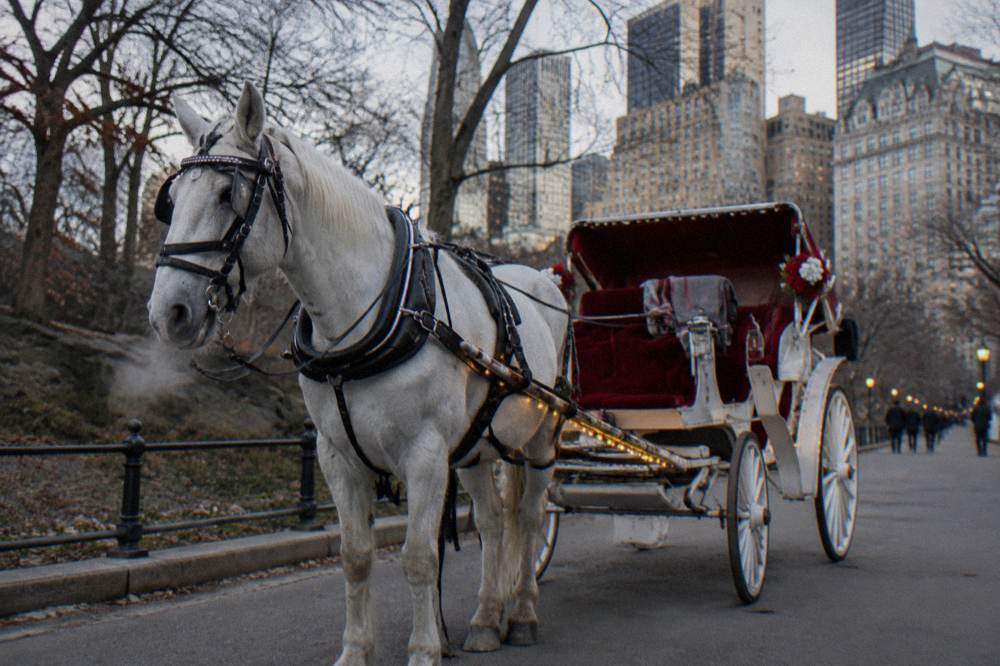
Carriage and rink products sit somewhere between. The "Horse-Drawn Carriage Lights Ride" is roughly 45 to 60 minutes of sitting still in open air, so your warmest layers belong on you, not in a bag. "Rockefeller Center Ice Skating" is a timed session of about an hour, rated 4.0 from 21 reviews, from $22 per person on the listing, with free cancellation and skate rental paid separately. Socks are the packing decision that matters there, thick ones, plus a spare pair.
| Tour format | Roster example | From | Duration | Packing emphasis |
|---|---|---|---|---|
| Walking, subway to Brooklyn | "Dyker Heights Lights on Foot" | $69 | Duration on the listing | Light kit, broken-in shoes, charger |
| Walking, Manhattan markets | "4-Hour Lights and Markets Walk" | $59 | 4 hours | Same, plus room for market purchases |
| Bus, hotel pickup | "4-Hour Bus Tour, Hotel Pickup" | $45 | 4 hours | Spare layers and snacks ride in the cabin |
| Open-air carriage | "Horse-Drawn Carriage Lights Ride" | $240 | Approx. 45-60 minutes | Maximum worn warmth, minimal bag |
| Timed rink session | "The Rink at Rockefeller Center Ice Skating Ticket" (4.0 from 21 reviews) | from $22 per person | 1 hour per session | Thick socks, spare pair, gloves for the ice |
All five formats on this table share one rule: check the cancellation terms when you book. Every tour listed above carries free cancellation, the rink included. Its skating session runs about an hour, and the live listing shows the same flexible terms as the walking tours, the cruise and the carriage ride. Pack for the weather you booked in. With flexibility across the board, a grim forecast does not lock you in.
What Extras Should You Pack For Kids On A Family NYC Christmas Tour?
For children, add snacks beyond what you think you need, a fully separate entertainment layer for waiting time, hand warmers sized for small pockets, and a duplicate of anything whose loss would end the evening, because cold, tired kids escalate fast and a lights tour gives you few graceful exits. Also pack for their photos, not just yours. The goal is keeping the evening inside their attention span.
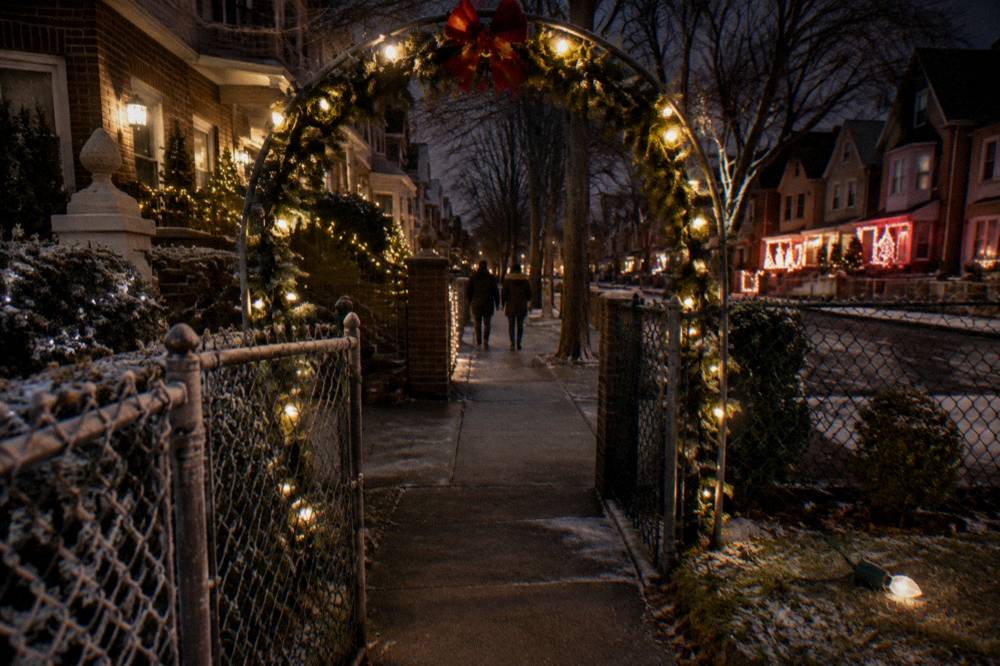
The waiting is the hidden cost of family lights tours. Meeting points fill early, groups move in bursts, and the subway leg out to Brooklyn on a walking tour is itself part of the adventure but also part of the standing around. Small, high-value items beat big ones: a thermos of hot cocoa works better than a backpack of toys, and hand warmers bought in bulk before the trip cost far less than anything sold near a tourist meeting point. Other pages covering the same trip are gathered on Christmas In New York Activities.
| Category | Kid-specific addition | Why it differs from the adult kit |
|---|---|---|
| Food | Snacks plus a thermos of something warm | Kids feel cold and hunger as the same complaint |
| Warmth | Extra hand warmers, spare gloves | Small gloves get wet or lost first |
| Waiting | One small pocket game or activity | Subway rides and group assembly eat attention |
| Photos | Let them carry the camera job for a stretch | Ownership of the photos extends their stamina |
| Safety | Note with your phone number in their pocket | Crowded display streets separate groups briefly |
If you are still choosing which product suits your group, the best NYC Christmas tours for families guide compares the roster from a kid's-eye view, and it is worth reading before you buy rather than after. The private format deserves a look for family logistics alone: the "Private Lights Tour With Pickup", from $399 per group of up to 6 travelers, is rated 5.0 from a small sample of 5 reviews, and a private vehicle removes the single biggest packing problem on a family night out, which is keeping everyone together on the subway. That one is a genuinely small review pool, so treat the rating as early signal rather than track record.
How Do You Carry Everything On The Subway To The Lights?
Take the smallest bag that closes, keep it in front of you on the train, and go light enough that you can climb station stairs without help. The verified access route to the Dyker Heights core is the R train to 86th Street or the D train to 79th Street, then a 10 to 15 minute walk, so your bag has to survive a real pedestrian journey, not just a curb-to-door hop. Driving is actively discouraged: heavy evening traffic and limited, competitive street parking.
The self-guided option costs nothing to walk, the residential display streets are public and free with no admission, which makes the subway-and-bag question the entire logistics burden. If you're weighing the do-it-yourself route against a guided product, this site's Dyker Heights lights tour guide covers the trade-offs; here the focus is what you carry while doing either.
| Leg of the journey | Packing consequence |
|---|---|
| Subway ride, R to 86th St or D to 79th St | Cross-body bag in front, phone and wallet not in back pockets |
| 10-15 minute walk to the display core | Total bag weight under what you'd carry for a mile comfortably |
| Display streets, roughly 83rd-86th between 10th/11th and 13th Ave | Hands free, nothing trailing that catches on crowd edges |
| Return trip, late evening | Portable charger already used once, so carry the battery, not just the cable |
The display area spans roughly 83rd to 86th Streets between 10th/11th and 13th Avenue, and evening crowds there are thick enough that an oversized backpack becomes a social problem, not just a shoulder problem. The pattern holds across recent seasons, as local coverage of the lights confirms, and a slim bag solves it entirely. The Brooklyn Paper guide to the Dyker Heights displays is the practical source on subway access and crowd timing, and it aligns with what the tour products themselves assume.
If the subway-and-crowd picture sounds like more friction than you want on a vacation evening, the bus format is the honest alternative. The "4-Hour Bus Tour, Hotel Pickup" departs from West 51st Street and Broadway, includes hotel pickup in its format, and is often booked same-day according to its own listing, which means you can decide the afternoon of, once you've seen how the weather and your group's energy are trending. For a fuller comparison of routes into Brooklyn, see how to get to Dyker Heights from Manhattan.
What Does A Christmas Tour Actually Cost Once You Add Extras?
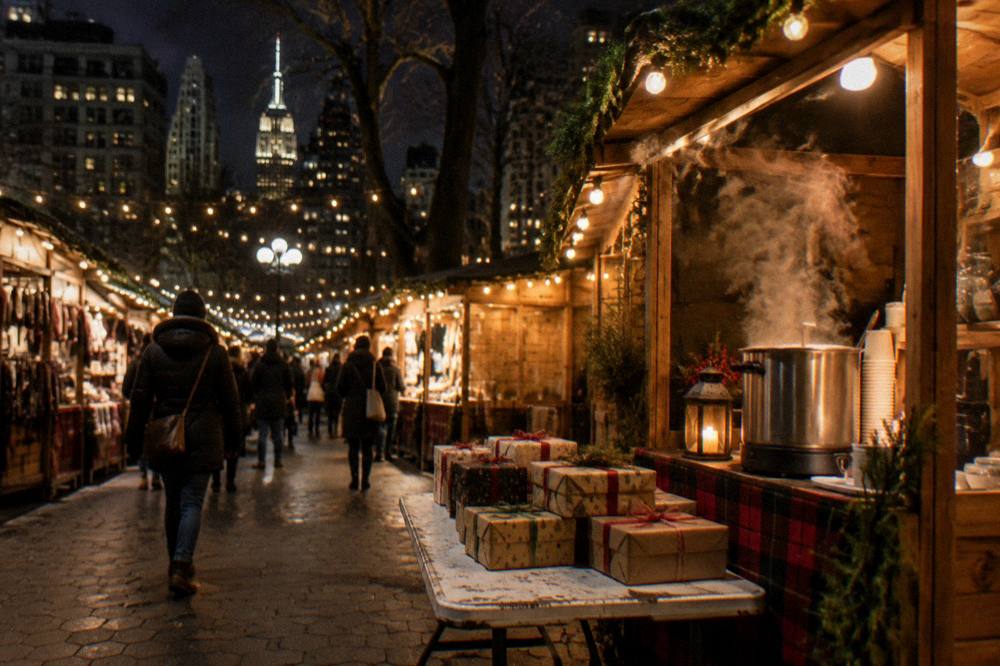
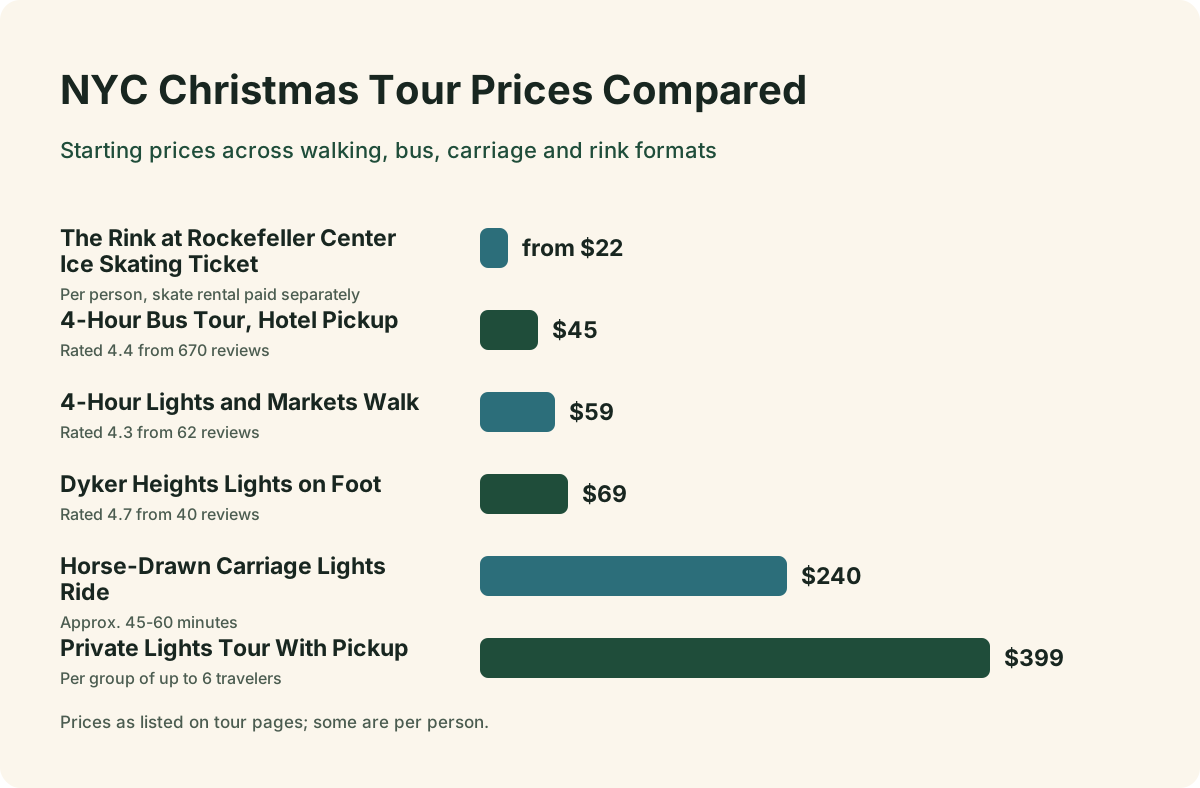
Budget roughly 20 to 40 percent on top of any tour ticket for the things you carry: warm drinks, snacks, market purchases and tips, all of which you cannot pack from home and will buy at winter markup. The tickets themselves range from free, self-guided Dyker Heights, to $240 for the carriage ride, so the extras matter most on the cheapest nights. Pack what you can, budget for what you can't.
The anchor prices on this site's roster are firm and verified: the walking tour from $69, the bus tour from $45, the markets walk from $59, the carriage ride from $240, and the "Evening Walk, Radio City Exterior" from $25 (Spectacular tickets sold separately), rated 4.3 from 59 reviews. Two venue figures sit alongside those without merging: Radio City's own tickets start at $50 in person at the box office and $55 online including service charges, and the 2026 run is November 4, 2026 to January 4, 2027 with 230 performances, the most ever, per the official announcement.
| Spend category | Planning range or firm figure | Packable from home? |
|---|---|---|
| Ticket, walking Dyker tour | From $69 | No, book ahead |
| Ticket, bus Dyker tour | From $45 | No, book ahead |
| Ticket, carriage ride | From $240 | No, book ahead |
| Hot drinks and snacks en route | Plan a few dollars per person per hour out | Partly, via thermos and snacks |
| Market purchases | Open-ended; markets are the classic budget leak | No, that's the point of going |
| Skate rental, Bryant Park rink | Roughly $18.72-$64.48 depending on package | No, timed reservation required |
Two seasonal anchors from the venue side are worth folding into a winter packing-and-budget plan. Bryant Park's Winter Village runs October 28, 2026 through February 28, 2027, daily including holidays, with free entry to the shops and paid, timed skating reservations, per the official Winter Village site. The Rink at Rockefeller Center opens its 90th anniversary season October 10, 2026, with general admission from $22 for a 60-minute session and skate rental separate, per the venue's own ticket page. Neither figure belongs in the same sentence as a tour listing price without saying which product it comes from.
What Should You Leave At Home Before A NYC Lights Tour?
Leave behind tripods and full-size camera bags, anything you would grieve losing on a subway platform, unwieldy shopping bags you plan to fill at markets, strollers wider than a sidewalk crowd allows at peak, and a fresh pair of shoes that has never walked a mile. None of it survives the evening well, and all of it slows the group down. The lights are best photographed handheld anyway.
Big camera gear is the classic overpack. The displays at Dyker Heights are bright, close and static, which is exactly the situation a modern phone handles well, and a tripod on a crowded residential street is more obstacle than tool. Wrapping your phone in a good case and a charged battery bank beats hauling a bag of glass. Gifts and market hauls cause the second failure: the "4-Hour Lights and Markets Walk" ends at Bryant Park, and the natural instinct is to buy along the way, so pack a foldable tote instead of arriving with a filled one.
| Leave at home | Why | What to bring instead |
|---|---|---|
| Tripod and camera bag | Crowded streets, static bright subjects | Phone, case, charged power bank |
| Filled shopping bag | Markets along the route will fill a new one | Flat foldable tote |
| Brand-new shoes | Blister risk multiplies over four hours | Broken-in waterproof boots |
| Bulky backpack | Subway crowds plus narrow display sidewalks | Slim cross-body bag |
| One heavy coat, no layers | Overheats indoors, can't tune outside | Three light layers plus shell |
The carriage format deserves one final note under this heading, because its packing logic is the purest of the roster: the "Horse-Drawn Carriage Lights Ride", rated 4.8 from 52 reviews, is roughly 45 to 60 minutes of sitting in open air, so there is genuinely nothing to carry and everything to wear. Blanket-level warmth, a hat, and gloves you can photograph through are the whole list. If the format comparison in this guide has you narrowing toward a guided product rather than a self-planned evening, how to choose the best NYC Christmas tour walks the decision by budget and group type, and this site's full rundown in the NYC Christmas tours overview covers every format on the roster, including a few, like the "Cocoa and Carols Yacht Cruise", where the packing answer is blissfully short since the hot cocoa is included.
For the classic route this page has centered on, the Dyker Heights Lights on Foot tour pairs the packing list above with a guide who handles the navigation, or you can Check availability at a genuine decision moment. More than any single item in any table above, the packing move that pays off is the simplest one: lay everything out the night before, wear the layers you already own, and keep the bag smaller than you think you need.
Common Questions About Packing For NYC Christmas Tours
What should you pack for an NYC Christmas lights tour?
Warm layers from skin to windproof shell, waterproof shoes with real grip, thin touchscreen gloves, a small bag that closes flat against you, a portable charger, a water bottle, and a paper note of your meeting point. Nothing that needs two hands, nothing heavy, and nothing you would grieve losing in a crowd.
How cold does an NYC Christmas tour feel at night?
Cold enough that operators build weather policies around it: the carriage ride allows rebooking or a refund if the operator cancels for weather. Standing still after dark drops the felt temperature fast, and the Brooklyn display core has no indoor waiting area, so pack for the coldest hour of your evening, not the day's average.
Should you pack differently for a walking tour, bus tour or carriage ride?
Yes. Walking tours, like the $69 "Dyker Heights Lights on Foot" or the $59 markets walk, demand a light kit and broken-in shoes. The $45 bus tour with hotel pickup lets you carry more and dress warmer in the cabin. The $240 carriage ride is a short, open-air sit, so wear your warmest layers and carry almost nothing.
How do you carry everything on the subway to Dyker Heights?
Use a slim cross-body bag in front of you. The verified route is the R train to 86th Street or the D train to 79th Street, then a 10 to 15 minute walk to the display core, roughly 83rd to 86th Streets between 10th/11th and 13th Avenue. Driving is discouraged due to heavy traffic and competitive street parking.
What should you leave at home before an NYC lights tour?
Tripods, camera bags, filled shopping bags, brand-new shoes, bulky backpacks and single heavy coats. The displays are bright and close, phone cameras handle them well, and every market along the route will hand you a reason to need a foldable tote instead of a full one.
Do you need to bring anything for the Rockefeller Center rink?
Thick socks, a spare pair, and gloves for the ice. The 90th anniversary season opens October 10, 2026, and the ice skating ticket, rated 4.0 across 21 reviews, covers a 60-minute session from $22 with skate rental separate. Free cancellation applies; the live listing shows the exact cut-off for the session you book.