What To Wear For An NYC Christmas Lights Tour
December evenings in New York are a standing game: the lights come on around dusk, the wind runs down the avenues, and the tours that show you both keep you outdoors for up to four hours. Here is the outfit, layer by layer.
Short answer
Dress in three layers: a merino or synthetic base, a warm fleece or wool middle, and a windproof coat, plus waterproof boots, a hat, gloves, and a scarf. Lights tours keep you outside from 45 minutes to 4 hours on December evenings, and every tour here except timed rink sessions cancels free up to 24 hours before start.
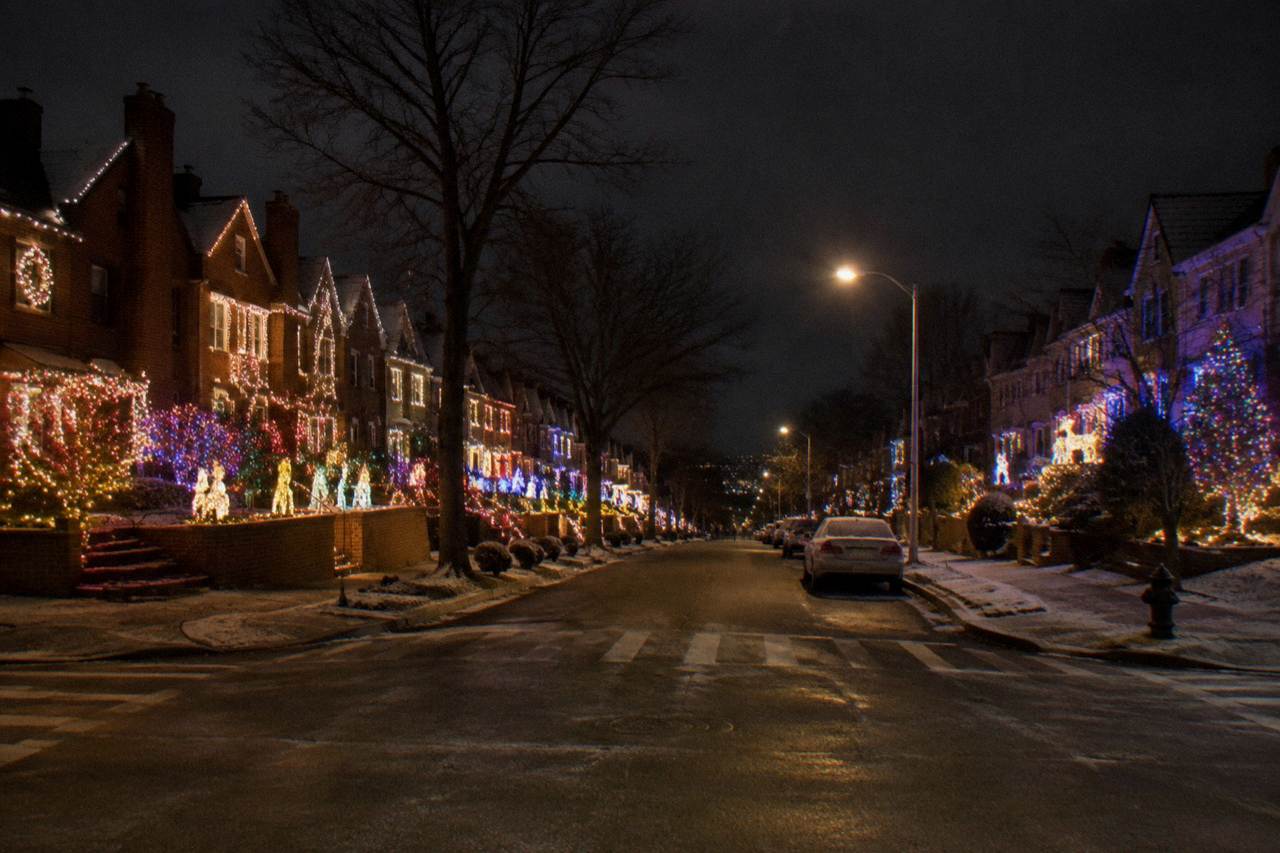
In Dyker Heights, the displays switch on around dusk, which in late December means somewhere near 4:30 in the afternoon, and many of the brightest houses go dark again around nine. Every lights tour in New York runs inside that cold, dark window, and most of the time inside it is spent standing still on a sidewalk rather than moving. That combination, motionless feet plus falling temperature plus wind that funnels between row houses and down plazas, is what your outfit has to survive.
The formats stretch from a 45-minute horse-drawn loop in Midtown to four-hour walking and bus expeditions that ride the subway out to Brooklyn and back. Each one puts a different demand on the same December evening. That is the question this Christmas In New York Activities guide answers, layer by layer, format by format, with the tour durations, prices and cancellation rules that should shape what you zip up on the way out the hotel door.
What Should You Wear On An NYC Christmas Lights Tour?
Plan a three-layer system: a merino or synthetic base layer, an insulating fleece or wool mid layer, and a windproof winter coat, finished with waterproof boots, a hat, gloves, and a scarf. New York lights tours keep you outdoors between 45 minutes and four hours on December evenings, and standing still in wind chills you faster than walking ever does.
The outfit mistake that ends most tours early is not underdressing, it is dressing for the wrong activity. A December walk feels manageable for the first ten minutes because movement generates heat. A lights tour is the opposite workload: you walk a block, then stand at a railing for six minutes while a guide talks, then walk another block. Heat production drops, but the wind and the cold pavement keep working on you. Dress as if you will be standing in a windy parking lot for the length of the tour, because functionally you will be.
The three-layer system solves this. The base layer sits against your skin and moves sweat outward, because damp skin loses heat fast. The mid layer traps air, and trapped air is what actually insulates your torso. The shell stops the wind from stripping that warm air away and sheds the drizzle that New York Decembers deliver more often than honest snowfall. The system also adapts: unzip on the subway platform crush, rezip when you surface in Brooklyn, and you never spend a segment of the night badly dressed.
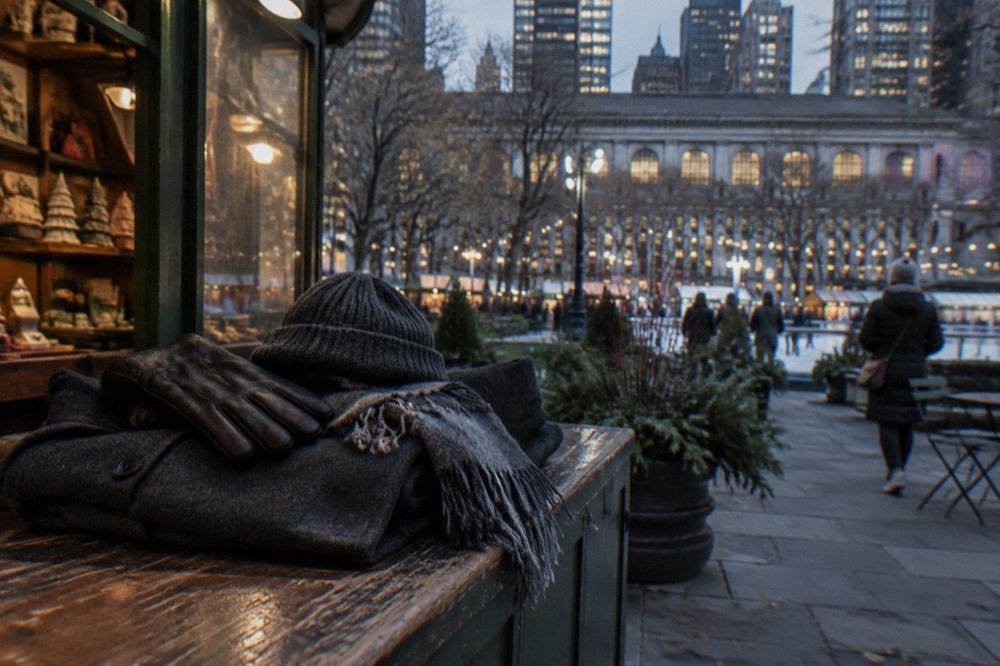
Extremities are the second half of the answer. Your head, hands and neck are where you feel the evening first, and where a cheap fix works best: a knit hat, real gloves, and a scarf you can pull up over your chin while you wait for the next display to cycle through its sequence. Here is the layer stack in table form.
| Layer | Job On A Lights Tour | Best Materials | What To Skip |
|---|---|---|---|
| Base, against skin | Move sweat off your skin so it cannot chill you | Merino wool, polyester blends | Cotton t-shirts, cotton thermals |
| Mid, insulation | Trap warm air around your torso | Fleece, wool sweater, packable down vest | Heavy cotton hoodies, thick knit dresses alone |
| Outer, shell | Block wind, shed drizzle and snow | Windproof parka or hooded shell | Thin fashion coats with no wind barrier |
| Extremities | Protect the points where heat escapes fastest | Knit hat, insulated gloves, wide scarf or neck gaiter | Bare head and hands, thin dress gloves |
Build the stack from what you already own. A base layer plus a sweater plus a real winter coat beats one expensive expedition parka worn over a t-shirt, because the three-piece version lets you tune your temperature all night instead of choosing one setting at the hotel and suffering it until the tour ends.
How Cold Does A New York December Evening Feel On A Lights Tour?
Cold in the specific way that standing-in-place cold works: temperatures fall steadily through the evening, wind funnels down the avenues and between Dyker Heights row houses, and damp air pulls heat out of cotton in minutes. The lights come on near dusk, around 4:30 to 5 p.m., and many displays switch off around 9 p.m., so tours run in the coldest stretch of the day.
The New York cold that matters on a lights tour is a composed thing: air temperature, wind speed, and dampness multiplied by stillness. Midtown avenues behave like wind tunnels at 7 p.m., and the residential streets of Dyker Heights, flanked by row houses, move their own drafts through the gaps. Add the slush line at every curb and the radiant chill of the pavement itself, and an evening that read as brisk on paper feels meaningfully colder by the second hour. No single garment fixes all three problems at once, which is the whole argument for layering.
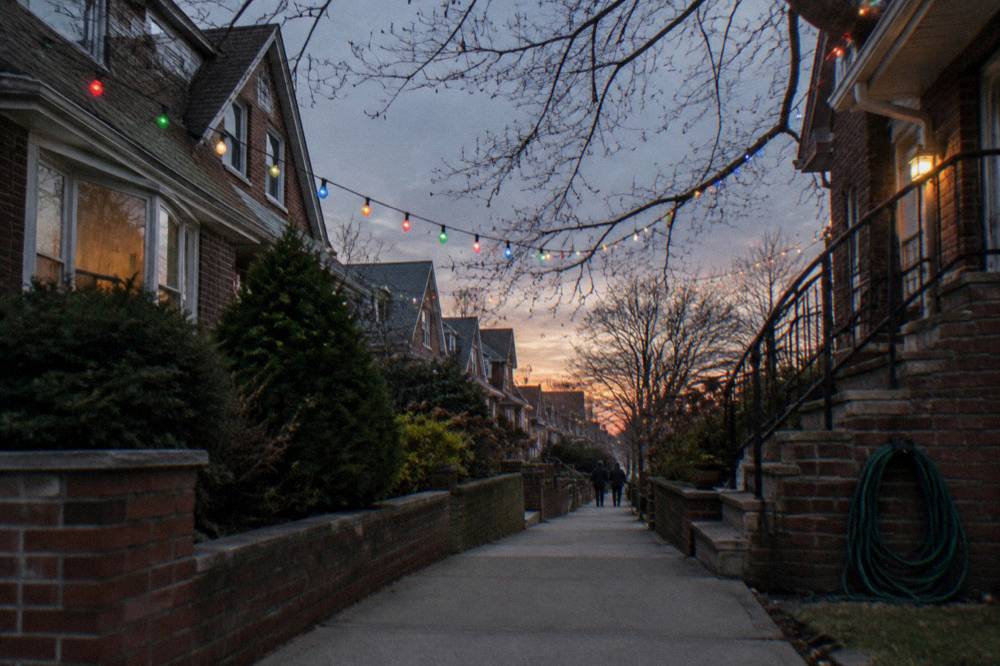
Timing changes the experience as much as clothing does. The displays glow from roughly 4:30 in the afternoon until around 9 at night, each homeowner setting their own hours, and the crowding follows a pattern worth knowing before you pick a departure: weeknights run quieter, while weekends in mid-December between 5 and 9 p.m. are the busiest stretch of the season. The Brooklyn Paper's Dyker Heights guide tracks that rhythm, and our own piece on the best time to see the Dyker Heights lights works through the trade-offs in detail. A quieter weeknight is also a warmer-feeling weeknight, because you are not standing in a packed, slow-moving crowd on the sidewalk margin.
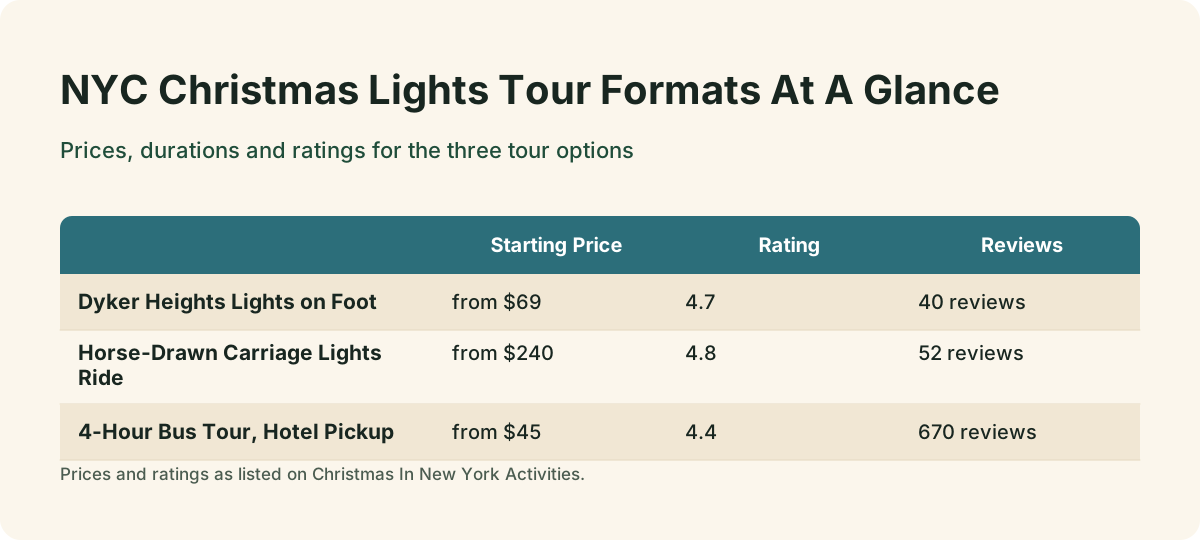
Whichever night you choose, the practical decision is which format of tour you want to be dressed for. Three options cover most bookings on this site: the "Dyker Heights Lights on Foot" walking tour from $69, rated 4.7 from 40 reviews; the "Horse-Drawn Carriage Lights Ride" from $240, rated 4.8 from 52 reviews; and the "4-Hour Bus Tour, Hotel Pickup" from $45, rated 4.4 from 670 reviews. All three keep you outside in the same window of cold dark, for very different lengths of time.
Which Fabrics Keep You Warm On An NYC Lights Walk?
Merino wool and synthetic knits win because they insulate even when damp; cotton loses, because the sweat and drizzle it absorbs conduct heat away from your body. A base layer that wicks, a fleece or wool mid layer that traps air, and a windproof shell together beat one thick garment every time, and they adapt from sidewalk to subway car.
Fabric choice is where tour clothing budgets get wasted in both directions. The expensive error is buying a heavy parka and wearing it over a cotton t-shirt: the coat blocks wind beautifully, but the damp cotton against your skin cancels half its benefit within the first hour. The cheap error is assuming any long-sleeve top counts as a base layer. It does not. A base layer has a job, wicking moisture off your skin, and only merino wool and synthetic performance knits actually do it.
Cotton deserves its own warning because it is the default fabric of travel wardrobes. It absorbs sweat, drizzle and snowmelt, holds that moisture against you, and then conducts your body heat straight out through it. A cotton hoodie under a wool coat is fine for a ten-block dash to dinner. On a four-hour lights tour it becomes a refrigeration layer somewhere around the second hour. Denim has the same flaw for your legs, and it gets worse when the slush soaks in at the ankles.
| Fabric | Warmth When Dry | Warmth When Damp | Best Use On A Lights Tour |
|---|---|---|---|
| Merino wool | Excellent | Excellent, keeps insulating | Base layers, socks, hats, scarf |
| Fleece, polyester | Very good | Very good, dries fast | Mid layer under a shell |
| Nylon or wool outerwear with wind barrier | Excellent | Excellent, sheds precipitation | Shell layer |
| Cotton jersey, flannel | Fair | Poor, loses insulation | Indoor layers only |
| Cotton denim | Fair | Poor, stays wet at the cuffs | Skip on tour nights |
Merino costs more per piece and synthetic base layers work nearly as well for less, so neither choice is wrong; the wrong choice is cotton, or nothing at all between skin and shell. Wool socks deserve special mention, because feet inside waterproof boots still sweat, and damp wool socks stay warm while damp cotton ones go cold and clammy around hour two.
The fabric question matters most on the format with the most hours in the open air. That is the Dyker Heights walking tour, the evening where every layer earns its place across four hours of Brooklyn sidewalks, and it is the one this site features for exactly that reason.
What Boots Handle New York Sidewalks In December?
Waterproof, insulated boots with grippy soles are the default answer, because December in New York means slush at every curb cut, wet subway stairs, and long stretches of standing on cold pavement. Sneakers can work on dry weeknights; they fail in melt puddles. Heels and smooth leather soles turn Brooklyn's sloped sidewalks into an actual hazard.
Footwear is the decision that most often separates the tourists still enjoying themselves at 8 p.m. from the ones calculating the fastest route back to the subway. The walk from the nearest stations to the Dyker Heights display core runs 10 to 15 minutes or more, using the R train to 86th Street or the D train to 79th Street, and the display streets themselves are ordinary residential blocks: sloped, patched, and collecting a melt line along every gutter. Our guide to getting to Dyker Heights from Manhattan covers the routing; the footwear point stands regardless of which train you take.
The sole matters as much as the waterproofing. Cold pavement plus a shallow film of meltwater is a genuine slip hazard in smooth-soled dress shoes, and it stays that way all evening because the temperature never rises enough to dry it. A lug sole or a deep tread pattern bites into that film. Insulation matters too, because the pavement pulls heat out of your boot soles while you stand and wait, a slow drain that thin fashion soles barely slow down.
| Footwear Type | Strengths | Weaknesses | Verdict For A Lights Tour |
|---|---|---|---|
| Waterproof insulated hiker | Traction, warmth, slush protection | Bulkier to pack | Best all-round choice |
| Duck-style insulated boot | Maximum warmth, easy on and off | Heavy for long walks | Strong for standing-heavy tours |
| Waterproofed leather city boot | Looks right for dressier formats | Needs re-proofing, modest tread | Good for carriage or cruise nights |
| Fashion sneaker | Comfortable, light | Soaks instantly, cold when damp | Dry weeknights only |
| Rain boot with wool sock | Fully waterproof | No insulation, slippery thin sole | Passable, not recommended |
Socks complete the system: midweight wool, and a spare pair in your bag on nights when the slush is deep, because dry socks at the halfway mark of a four-hour tour feel like a whole second outfit. Even the seated formats do not excuse bad shoes. The "Horse-Drawn Carriage Lights Ride" departs from the carriage stand at 59th Street and 7th Avenue, runs approximately 45 to 60 minutes, and starts from $240 with a 4.8 rating from 52 reviews, and you stand at the stand before you sit in the carriage, on the same cold pavement everyone else in Midtown is standing on.
Does Tour Format Change What You Wear On An NYC Christmas Lights Tour?
Yes, more than the thermometer does. A four-hour walking or bus tour is a standing-and-waiting outfit: full layers, serious boots, every accessory. A 45-to-60-minute carriage ride or a 90-minute cruise trades some insulation for polish, since you are seated, moving, or partly sheltered. Dress for the longest stretch of standing still your night actually contains.
Format is the variable most people ignore when packing, and it is the easiest one to plan for because the durations are published. The two four-hour formats, the bus tour and the markets walk, demand the complete kit. The bus format softens the load: the "4-Hour Bus Tour, Hotel Pickup" includes hotel pickup, departs from Broadway and West 51st Street, returns to the Greater Times Square area, runs in English and Spanish, starts from $45, and the listing notes it is often booked same-day. Your feet still do the standing at every stop, but the coach gives you seated recovery between them, which means you can run one layer lighter than a pure walking night. Other pages covering the same trip are gathered on Christmas In New York Activities.
| Tour Format | Duration | Time In The Open Air | Price From | Rating And Reviews |
|---|---|---|---|---|
| "Dyker Heights Lights on Foot" | Duration on the listing | Subway ride plus sidewalk standing in Brooklyn | $69 | 4.7 from 40 reviews |
| "4-Hour Bus Tour, Hotel Pickup" | 4 hours | Stops on foot, seated travel between | $45 | 4.4 from 670 reviews |
| "Horse-Drawn Carriage Lights Ride" | Approx. 45-60 minutes | Seated but fully in the open air | $240 | 4.8 from 52 reviews |
| "Cocoa and Carols Yacht Cruise" | 1 hour 30 minutes | Seated aboard, deck exposure between sights | $134 | 4.7 from 572 reviews |
| "4-Hour Lights and Markets Walk" | 4 hours | Continuous walking with market browsing | $59 | 4.3 from 62 reviews |
The private option stretches the format logic further rather than changing it. The "Private Lights Tour With Pickup" runs four hours with pickup from any NYC location, starts from $399 per group of up to six travelers, and carries a 5.0 rating from 5 reviews, a small sample but an unhurried one. You still stand at the displays; you simply control the pace, which means you can budget a warm-up break into the night instead of dressing for nonstop exposure.
The markets walk adds one wrinkle: part of its four hours happens indoors or half-sheltered among vendor stalls. The "4-Hour Lights and Markets Walk" starts from $59, is rated 4.3 from 62 reviews, departs from the main entrance of the Shops at Columbus Circle, and ends at Bryant Park, whose Winter Village runs October 28, 2026 through February 28, 2027 with free entry, per the Winter Village's official site. Browsing booths warms you up; the rink-side standing cools you back down, so treat this format as a full-kit night with a bonus thaw in the middle.
The walking tour is the purest test of the outfit, and the one this site features for readers who want the full Dyker Heights immersion. The "Dyker Heights Lights on Foot" tour starts from $69, carries a 4.7 rating from 40 reviews, runs December 1 to January 3, and begins at a small square near a cafe close to Rockefeller Center, where you meet a guide holding a flag and ride the subway out to Brooklyn together; duration is on the listing. Full layers, real boots, wool socks, thermos. See the Dyker Heights walking tour page for departure details and live pricing, or go straight to the operator's live listing: Check availability.
Everything in this guide's layer stack applies to that evening at maximum intensity, because the subway ride out and back is the only heated stretch of the night.
What Should You Wear On A NYC Christmas Carriage Ride Or Holiday Cruise?
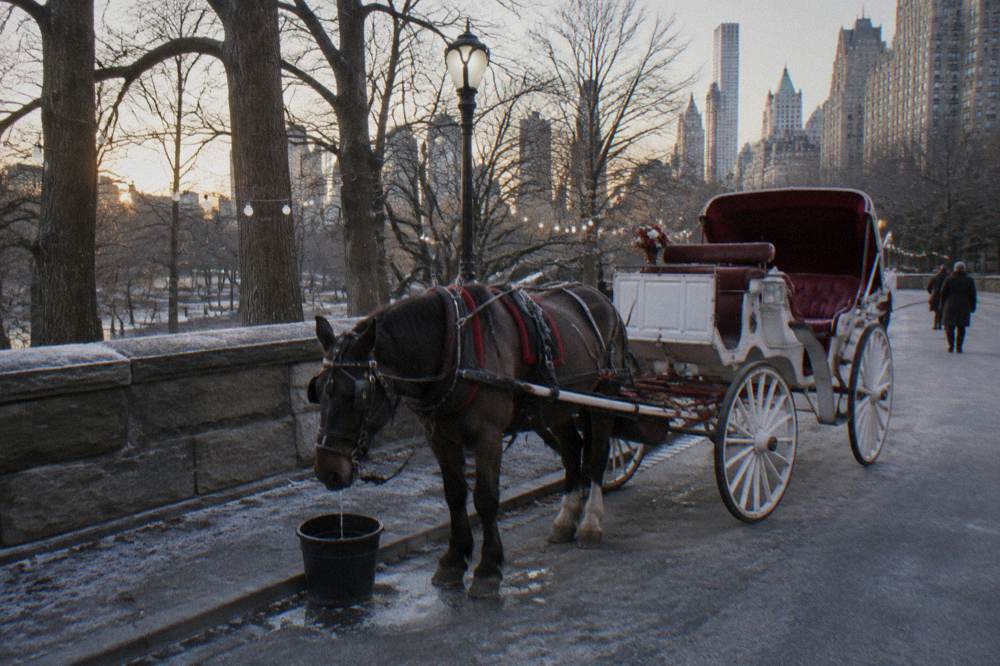
One notch dressier and one layer lighter than a walking tour. Carriage rides and cruises are seated, so you can trade the expedition parka for a wool coat over a warm mid layer; bring the hat, gloves and a blanket-size scarf anyway, because open air at carriage pace still finds every gap. Skip heels, especially on the carriage step.
Seated formats change the physics. Walking generates heat; sitting still in a moving carriage or on a cruise deck does not, but the shorter runtime and the windbreak of the vehicle itself offset most of the difference. The practical formula is a wool coat over a proper mid layer, gloves you can remove for photographs, and a scarf wide enough to double as a lap blanket. Photographers should note that dark coats read elegantly against the lights while pale colors pick up every colored bulb in the frame.
The cruise is the most forgiving format of all, temperature-wise. The "Cocoa and Carols Yacht Cruise" runs one hour and 30 minutes, starts from $134, carries a 4.7 rating from 572 reviews, and departs from the ticket booth at Pier 62, Chelsea Piers. Holiday cookies and one spiked hot cocoa are included, with additional drinks available to purchase, and the listing shows it was booked 10+ times in the past week. Dress for deck photographs rather than survival: the wool coat formula, a warm hat that fits your plans for the evening, and shoes with enough tread for a gangway.
One more seated option sits at the dressy end of the roster: "Santa's Rickshaw Sleigh Ride" from $200, departing from 190 Central Park South. It carries a single five-star review so far, which is a genuinely new listing rather than a track record, so treat it as an experiment in format rather than a proven quantity. The outfit logic is the carriage logic, with more of your legs exposed to the moving air.
What Should You Pack In Your Bag For A New York Christmas Lights Tour?
A small crossbody or daypack with a phone power bank, hand warmers, tissues, a spare thin scarf, and transit payment covers almost every lights tour in the city. Add a thermos for walking formats, gloves you can photograph in, and spare socks on slush nights. Leave the umbrella at the hotel if wind is in the forecast.
The bag itself is a real decision on crowded sidewalks. Anything worn on your back in a packed Dyker Heights crowd becomes a battering ram at child height and a pocket-picker's opportunity, so a crossbody that closes fully, worn in front, beats a backpack on the busy weekend nights. On quieter weeknights the daypack is fine and carries more, which matters if you are hauling children's spare gloves and a thermos of something hot.
| Item | Why It Earns Its Space | Format That Needs It Most |
|---|---|---|
| Phone power bank | Photos, meeting-point maps and train times drain batteries in the cold | All formats |
| Hand warmers | Cheap, instant morale repair for standing stretches | Walking and bus tours |
| Thermos | A hot drink at hour three outperforms another layer | Four-hour formats |
| Spare wool socks | Dry feet restore a whole tour after a slush hit | Wet nights, any format |
| Tissues and lip balm | Cold wind, cold-weather noses | All formats |
| Thin packable scarf | Wind block you can stow when the crowd thickens | Carriage and cruise |
Two small notes on the transit piece. A contactless card handles the subway fare without a machine queue, which matters when you are steering a family toward an R train at the same moment as two hundred other people. And the power bank is not paranoia: cold degrades battery performance visibly, and your phone is simultaneously your camera, your map to the meeting point, and your ride home. Our full NYC Christmas tour packing list expands on this for travelers who like to plan to the item.
What Should Kids Wear On An NYC Christmas Tour?
The same three-layer system in miniature, sized one step warmer than yours, plus the gear children lose: waterproof mittens that clip together, a hat with ear coverage, and boots they have already broken in. Kids stand still less and complain more, so hand warmers and a snack buy more comfort than any single expensive jacket will.
Children's touring reality runs hotter and colder than adults' at the same time: they sprint between displays and then demand to be carried, they run warm while moving and chill fast the moment they stop. The layer system handles both states better than one puffy coat does, because you can shed the mid layer during a sprint phase and restore it for the standing one. Mittens matter more than gloves for small hands, and the clip that keeps them attached to the coat sleeves is the difference between having them at hour three and not.
The most physical family format on the roster is skating, and it has its own sock and glove logic. "The Rink at Rockefeller Center Ice Skating Ticket" covers a 60-minute session, opens its 90th anniversary season on October 10, 2026, starts from $22 per person on the tour listing, and carries a 4.0 rating from 21 reviews, with free cancellation per the listing's terms. Skate rental is separate, per the rink's official ticket page. For the ice itself: midweight socks, not thick ones, because skate fit is snug, and gloves, because every beginner spends some of the session in contact with the surface.
For matching formats to ages more broadly, our guide to Christmas tours that suit families walks through the trade-offs, including which formats have the shortest exposure and the easiest exits when small legs run out of patience.
What Should You Not Wear On An NYC Christmas Lights Tour?
Skip cotton against the skin, heels and smooth-soled leather, bulky headphones that block the guide, and any bag you cannot close fully. Giant umbrellas fail in avenue wind and block sightlines on crowded sidewalks; a hood or a cap does the same job better. Brand-new or all-white footwear will not survive Dyker Heights slush unscathed.
The negative list is short because the failures repeat. Cotton baselayers chill you, as covered above. Heels and leather dress soles slip on the melt film that coats every curb after dark, and the display streets in Brooklyn slope more than Midtown avenues do. Over-ear headphones seal you off from the guide's calls on a walking tour, which is how groups get separated at subway turnstiles. An open-top tote in a dense crowd is an invitation, and a filled one is an obstruction at shoulder height on packed sidewalks.
Umbrellas deserve their own line. New York's avenue wind inverts them reliably, a blown umbrella in a crowd becomes a hazard to every face at its altitude, and on the busiest mid-December weekend evenings the sidewalk simply does not have the room. A hood, a cap with ear flaps, or a good hat and a water-repellent shell keeps you drier in practice than an umbrella does in theory. Photographers should add one more consideration: extremely dark coats vanish against night backgrounds, and extremely pale ones photograph orange under the colored displays. Mid-tone colors, a scarf with some pattern, and you will look like you belong in the pictures.
One warmth note cuts the other way at the market stops. The vendor stalls get crowded and half-enclosed, and standing in a queue with a full expedition kit on will have you sweating within minutes. Union Square and Columbus Circle holiday markets have not confirmed their 2026 dates yet; recent years ran roughly mid-November through December 24 and approximately December 1 through 31 respectively. Plan layers you can open, not just layers you can add.
How Does Bad Weather Change Your NYC Lights Tour Plans?
Snow rarely cancels anything; operators run in it, and the lights photograph better for it. Every tour on this roster except timed rink sessions cancels free up to 24 hours before start, and the carriage adds weather-dependent rebooking or refund on top, so the forecast can decide your night at no cost. Outfit, not booking, is the part you control.
Here is the cancellation picture in one place, since it shapes how much weather risk you are actually taking when you book. The walking tour, the bus tour, the private tour, the markets walk, the cruise, the carriage and the rickshaw ride all cancel free up to 24 hours before start. The carriage goes further and is explicitly weather-dependent, with rebooking or a refund if the operator cancels for weather. The rink's timed sessions are the exception: the live listing shows the current cancellation window for the specific session booked, so read