How To Get To Dyker Heights From Manhattan For The Christmas Lights
Southwest Brooklyn, after dark, in the last week of November: rooflines start glowing between 83rd and 86th Streets, and by mid-December the residential grid around 13th Avenue pulls crowds thick enough that the transit advice matters almost as much as the lights. This is the logistics guide for that trip, built around one decision: ride out on your own, or book something that carries you.
Short answer
Dyker Heights sits in southwest Brooklyn, with the display core roughly on 83rd to 86th Streets between 10th/11th and 13th Avenues. From Manhattan, take the R train to 86th Street or the D to 79th Street, then walk 10 to 15 minutes; walking the displays is free. Guided options run from $45 with hotel pickup.
The Dyker Heights Christmas lights are not an event with a gate. They are private houses on public residential streets in southwest Brooklyn, decorated by their owners, free to walk past, and lit on whatever schedule each household picks. The densest stretch runs roughly from 83rd to 86th Streets between 10th/11th Avenues and 13th Avenue, a solid subway ride from the Midtown hotel district and worth planning for exactly that reason. If you want to see how these Brooklyn blocks stack up against the rest of the city, the comparison of every major Christmas lights display in NYC covers the subway routes, the walking spots, and what each option costs.
The planning problem is the getting there. This page sets out the subway directions in full, compares the three bookable alternatives that fold Brooklyn transport into the ticket, explains why driving is the one option local coverage keeps advising against, and pins down the timing choices that decide whether your evening feels like a stroll or a crush.
It is the transit leg of the Christmas In New York Activities coverage of the Brooklyn displays, and it assumes nothing beyond a Manhattan base and a free evening after dark.
Where Is The Dyker Heights Christmas Lights Location?
The displays sit on public residential streets in southwest Brooklyn, with the heaviest concentration roughly from 83rd to 86th Streets between 10th/11th Avenues and 13th Avenue. There is no venue, gate, or ticket booth; homeowners decorate their own houses, so the location is a walkable neighborhood grid rather than a single attraction.
The search phrase treats Dyker Heights like a destination with an address and a box office. It is better understood as a grid. Roughly 83rd to 86th Streets, between 10th/11th Avenues and 13th Avenue, holds the densest run of decorated houses, and the displays thin out as you move away from that core in any direction. Sidewalks are public, entry is free, and there is no official start date because every homeowner sets one independently. Recent seasons have followed the same pattern: displays go up from late November, often the weekend after Thanksgiving, and many stay lit through Christmas into the first week of January, some as far as January 6 (see Where to Stay in NYC).
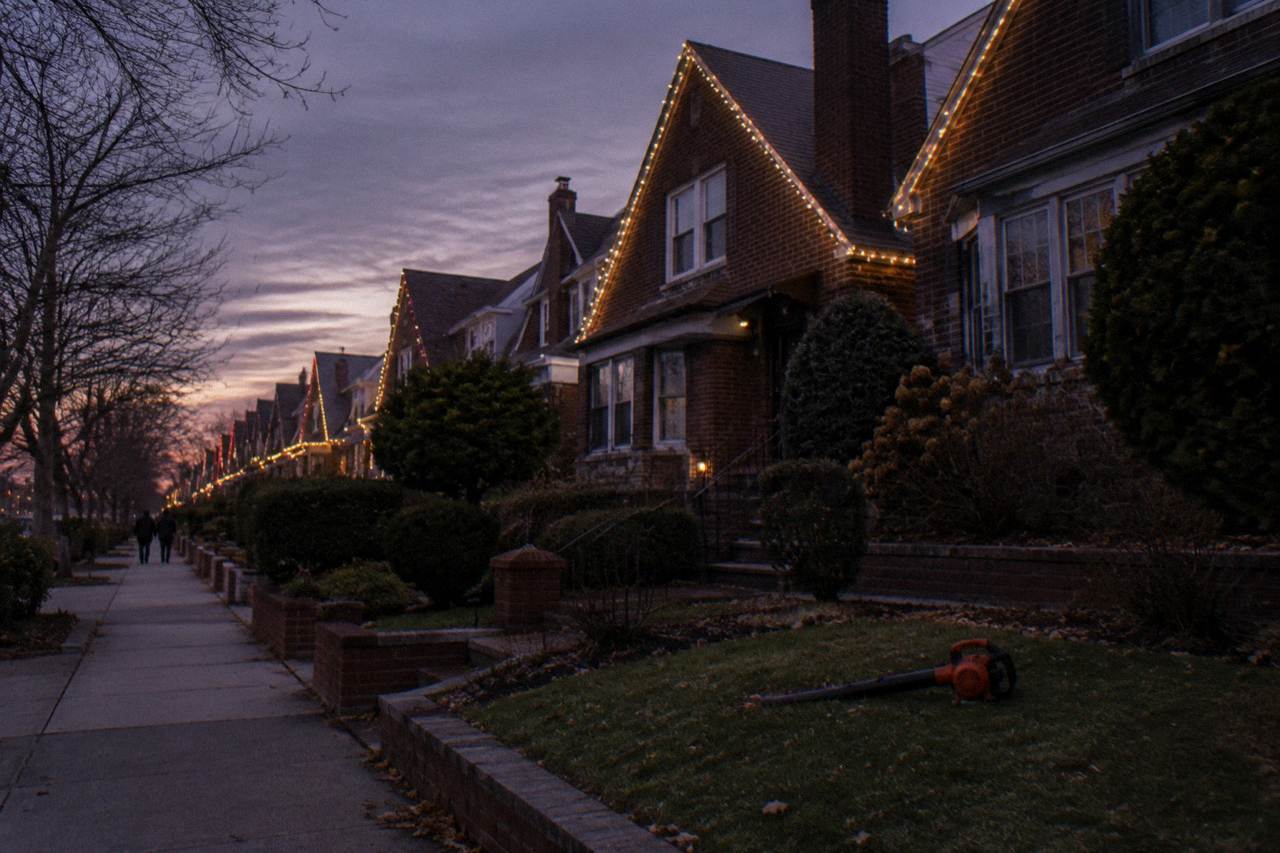
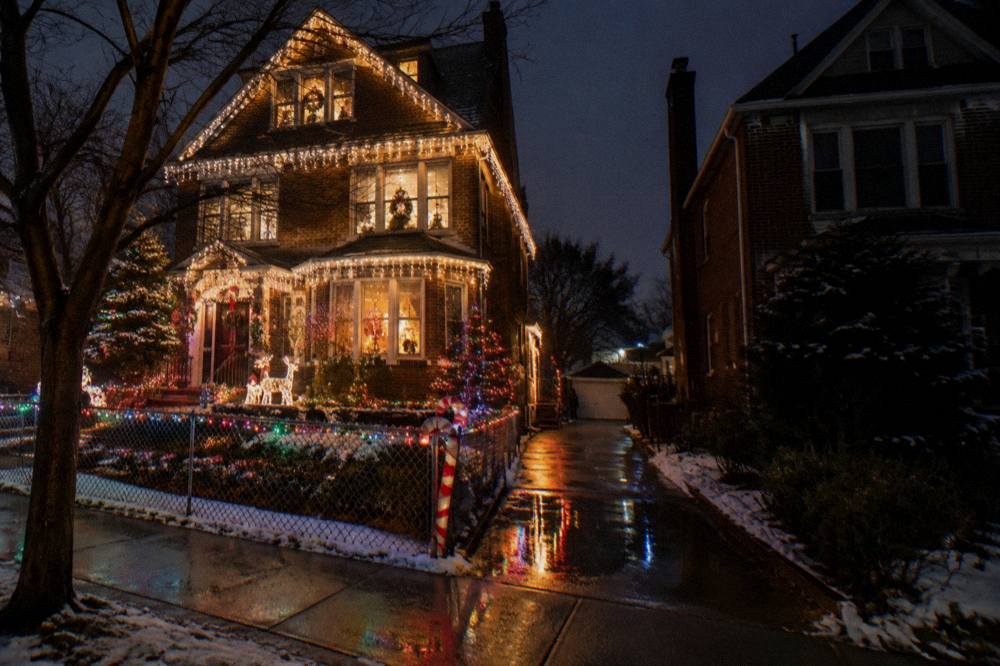
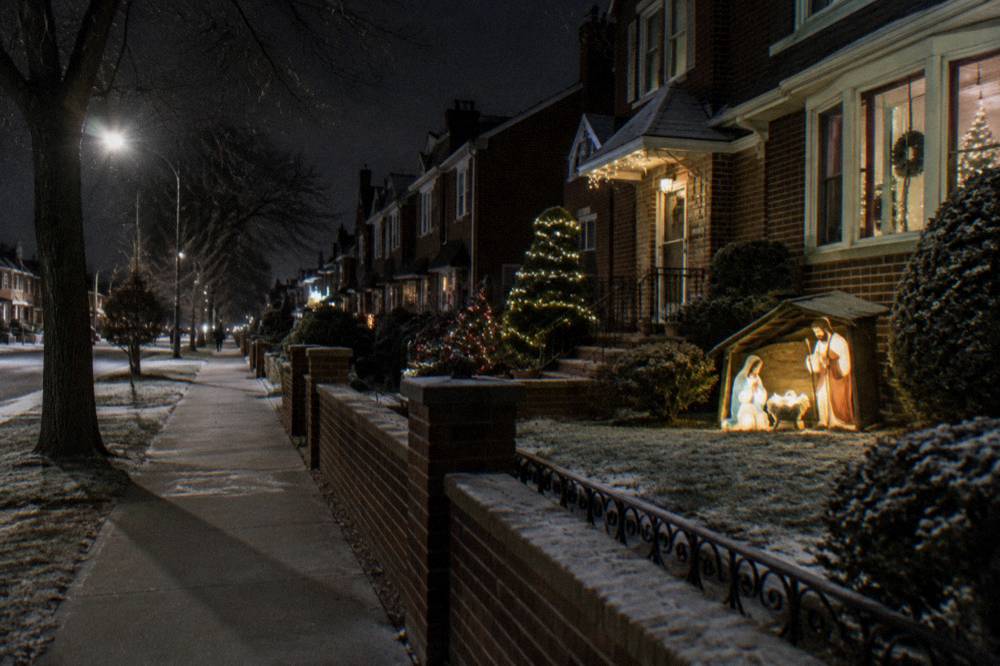
On the ground it looks like this. Rooflines traced in string lights, front yards crowded with lit figures, and the occasional house that treats December as a competitive sport. Blocks vary more than the photos suggest. One stretch can glow from every window while the next is quietly dark, which is why the route you walk matters more than any single address, and why a guided option can be worth paying for even though the thing you came to see costs nothing.
Two subway lines serve the area, the R and the D, and both land you within the same 10 to 15 minute walk of the core. That walk is part of the experience rather than a defect in the plan. The streets between the station and the densest blocks are themselves part of the display, with lit houses appearing a block or two before the crowd thickens, and arriving on foot is simply how the neighborhood is meant to be seen. Buses and tour vehicles circle the edges, but the displays themselves are a pedestrian affair.
One more framing note before the directions. Because this is a residential neighborhood and not a venue, everything about the visit, timing, crowding, even how long the lights stay on, is set by dozens of independent households rather than an operator. That is also why the season stretches past Christmas: plenty of owners keep the display running through the first week of January, and the period between Christmas and New Year can be a quieter window than peak weekends, a point the timing section returns to in full.
How Do You Get From Manhattan To Dyker Heights By Subway?
The direct route is the R train to 86th Street or the D train to 79th Street, each followed by a 10 to 15 minute walk to the displays. Trains run from Manhattan stations throughout the evening, and the same lines carry you back. Driving is discouraged during display hours because evening traffic is heavy and street parking is limited.
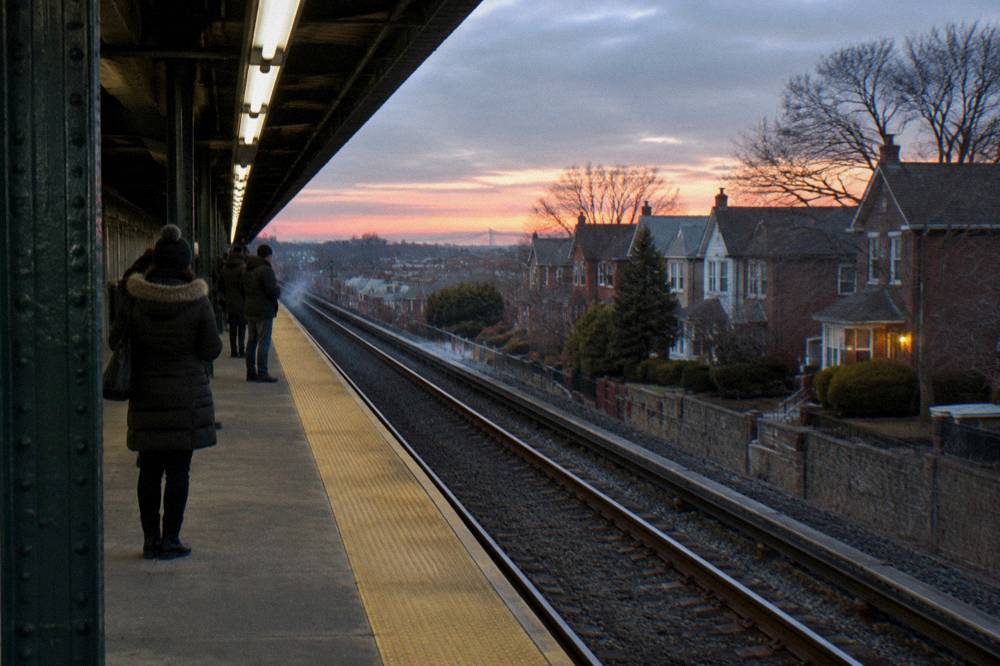
The R train's 86th Street station drops you at the top of the display grid, so the walk in doubles as a warm-up lap past the first lit houses. The D train's 79th Street station sits a few blocks south of the densest stretch, which lengthens the approach but lands you at the quieter end, useful if you would rather build up toward the peak blocks than start in the middle of them. Brooklyn Paper's annual Dyker Heights guide recommends exactly these two stops, and its reporting matches what every other local outlet repeats: take the R or the D, then walk, and expect the walk to run 10 to 15 minutes or more depending on where in the grid you start.
| Line | Get off at | Walk after | What to expect at the exit |
|---|---|---|---|
| R train | 86th Street station, Brooklyn | 10 to 15 minutes or more | Drops you at the top of the display grid |
| D train | 79th Street station, Brooklyn | 10 to 15 minutes or more | Lands a few blocks south of the densest stretch |
Three practical notes make the ride easier. The walk at the end is along residential sidewalks after dark, so this is a warm-coat, sensible-shoes trip, a point worth taking seriously before you leave the hotel rather than after. Timing matters more than most first-time visitors expect, because the lights run on a dusk-to-around-9 p.m. schedule that compresses the whole visit into a fixed evening window. And the return trip is the same ride in reverse, with the caveat that everyone else leaves when the lights go off, so platforms fill quickly at switch-off and a few minutes of patience at the end of the night is normal.
There is also a middle path that keeps the subway but removes the guesswork. The "Dyker Heights Lights on Foot" walking tour starts from a small square near a cafe close to Rockefeller Center, where the guide holds a flag, and the group rides the subway out to Dyker Heights together. It runs from $69, rates 4.7 from 40 reviews, includes free cancellation up to 24 hours before start, and covers December 1 to January 3; duration sits on the listing rather than in a fixed number here. You still ride the R or the D. You just do it behind a flag instead of a map app, with someone else accountable for the stop and the route through the grid.
For every reader who finds that arithmetic simple, there is one who does not want to ride home at the end of a cold December night, or manage stations with tired children, or work out the return while standing on a Brooklyn sidewalk. The three Dyker options below all remove at least part of that burden, at three very different price points, and the next section compares them directly against the self-guided ride.
Subway Or Guided Tour: Which Is The Better Way In?
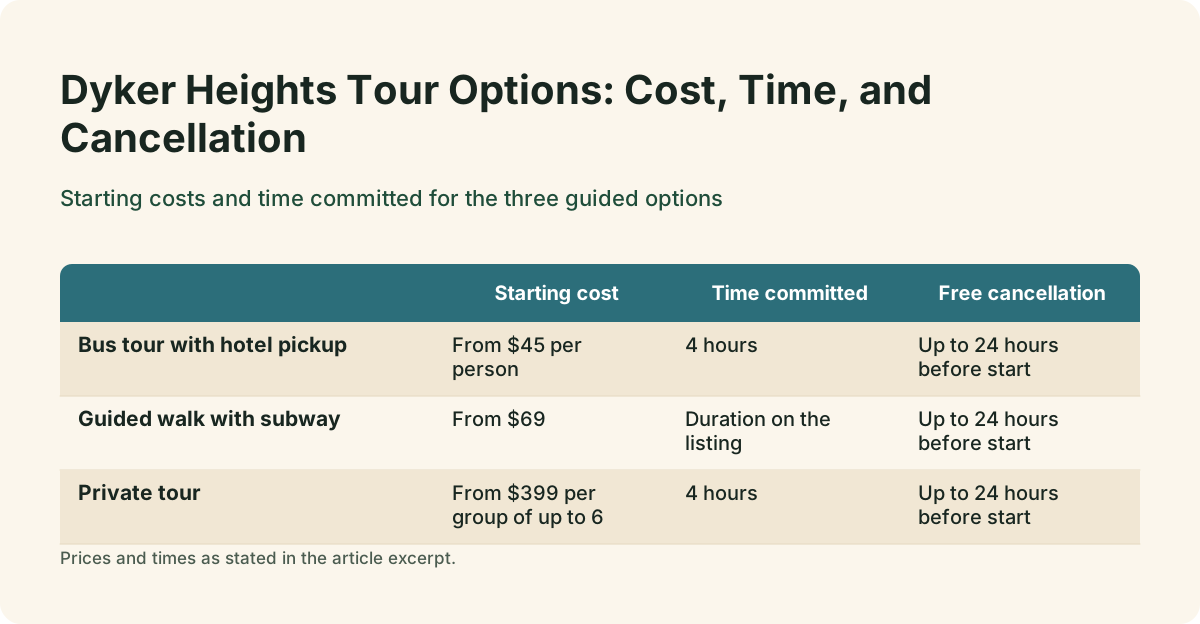
A guided tour trades the subway leg for a handled trip: the bus option starts from $45 with hotel pickup and runs 4 hours, the guided walk starts from $69 and rides the subway with a guide holding a flag, and the private version starts from $399 per group of up to 6 with pickup from any NYC location. All three cancel free up to 24 hours before start.
Handled means different things on each of the three, and the differences are worth spelling out before any price comparison. The "4-Hour Bus Tour, Hotel Pickup" collects you at your Manhattan hotel, drives you to Brooklyn, and returns you to the Greater Times Square area, so your only responsibility is showing up in the lobby. The "Dyker Heights Lights on Foot" walk meets you in Midtown and turns the subway leg itself into a guided activity. The "Private Lights Tour With Pickup" sends a vehicle to any New York City address you name and builds the evening around your group alone.
The cost logic is straightforward once you lay it side by side. Walking the displays themselves is free no matter how you arrive; what you are paying for on any tour is the transport, the route, and someone else watching the clock. For a fuller field breakdown including angles this page does not cover, the Dyker Heights tour options compared head to head guide runs the same products across a longer list of criteria.
| Way in | Starting cost | Time committed | Transport handled? | Free cancellation |
|---|---|---|---|---|
| Self-guided by subway | Subway fare each way | Your own evening | No, you ride and navigate the walk | Not applicable |
| Guided walk with subway | From $69 | Duration on the listing | Partially, guide leads the ride and route | Up to 24 hours before start |
| Bus tour with hotel pickup | From $45 per person | 4 hours | Yes, hotel pickup and return near Times Square | Up to 24 hours before start |
| Private tour | From $399 per group of up to 6 | 4 hours | Yes, pickup from any NYC address | Up to 24 hours before start |
Read that table as a decision ladder rather than a ranking. The subway row is the cheapest and the most flexible, and for a confident traveler on a weeknight it is hard to beat. The bus row is the value pick among the handled options, cheaper than the walk per person and easier on legs and luggage. The walk buys narrative and route-finding in the displays themselves. The private row buys exclusivity and door-to-door service for a group that would otherwise need two cars or a very patient babysitter.
If the idea of a handled Brooklyn leg already appeals, the question below the question is which handled version fits your party, and that is what the next section answers in detail.
What Does Each Dyker Heights Tour Option Actually Include?
The bus option collects you at your Manhattan hotel and returns you to the Times Square area over 4 hours. The guided walk meets near Rockefeller Center and rides the subway out with a flag-holding guide. The private version picks up from any New York City address, also runs 4 hours, and carries a 5.0 rating from a small sample of 5 reviews.
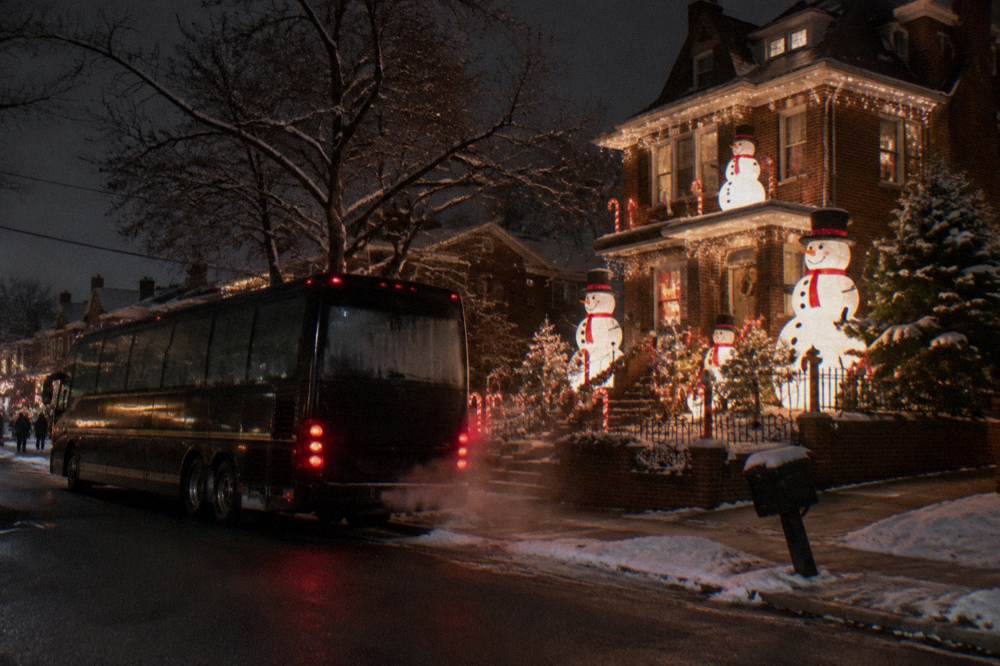
The "4-Hour Bus Tour, Hotel Pickup" is the workhorse of the three. Hotel pickup is included, the departure point sits at 1651 Broadway at West 51st Street, and the tour returns to the Greater Times Square area, which puts most Midtown visitors within a short walk of their beds at the end of the night. It runs 4 hours, is narrated in English and Spanish, rates 4.4 from 670 reviews, and starts from $45. The listing notes it is often booked same-day, which makes it the natural choice when the evening's plans come together late. Cancellation is free up to 24 hours before start.
The "Dyker Heights Lights on Foot" walk, covered in the subway section above, is the hybrid: Midtown meeting point near Rockefeller Center, a guide with a flag, and a group subway ride to the displays. It rates 4.7 from 40 reviews, with free cancellation; check the live listing for price and dates. Full details, including the current duration as shown by the operator, sit on the Dyker Heights Lights on Foot tour page, with live dates and pricing on Check availability.
The "Private Lights Tour With Pickup" is the third animal entirely. It runs 4 hours, picks up from any location in New York City, and starts from $399 for the whole group of up to 6 travelers. Its 5.0 rating comes from a sample of 5 reviews, which is a genuine signal but a small one, and should be read as early satisfaction rather than a settled track record. The listing reports 10+ bookings in the last month, so the product is moving despite the young review pool. For a family of five or six, the per-person math can land closer to the group tours than the sticker price suggests, a point the cost section works through.
| Tour | From | Rating and reviews | Duration | Pickup | Season |
|---|---|---|---|---|---|
| "4-Hour Bus Tour, Hotel Pickup" | $45 per person | 4.4 from 670 reviews | 4 hours | Manhattan hotel pickup, returns near Times Square | Nov to Dec |
| "Dyker Heights Lights on Foot" | $69 | 4.7 from 40 reviews | Duration on the listing | Midtown meet near Rockefeller Center, subway out as a group | Dec 1 to Jan 3 |
| "Private Lights Tour With Pickup" | $399 per group of up to 6 | 5.0 from 5 reviews, small sample | 4 hours | Any New York City address | Nov to Dec |
All three fold the Brooklyn transport problem into the ticket, which is the entire reason they exist on a logistics page. What none of them can change is the calendar and the clock: the lights run on the neighborhood's schedule, not an operator's, which makes the timing question as consequential as the transport one.
When Should You Go To Beat The Crowds?
Go on a weeknight, or late in the run. Lights switch on around dusk, roughly 4:30 to 5 p.m., and many houses go dark around 9 p.m. The peak crush is mid-December weekends between 5 and 9 p.m.; the stretch between Christmas and New Year runs lighter than that peak, and weeknights are quieter still.
The evening has a shape, and knowing it changes the visit. Lights come on around dusk, which in late December means roughly 4:30 to 5 p.m., and many households switch off around 9 p.m. That gives you a hard window of about four usable hours, and the crowd builds inside it predictably: thin at switch-on, thick by 6, and thinning again only as the displays start going dark. Arriving at the front of the window buys you lighter sidewalks and full darkness, since Brooklyn in late December is properly dark before 5. The wider set of guides lives on Christmas In New York Activities.
Weekends in mid-December are the busiest stretch of the season, especially between 5 and 9 p.m., when tour buses and independent visitors stack on the same few blocks. Weeknights are generally quieter at every point in December. The period between Christmas and New Year can also be less crowded than the mid-December peak, and since many houses stay lit into the first week of January, it is a legitimate strategy rather than a consolation prize: same lights, shorter lines of people, and a subway ride home with more elbow room.
| Window | Crowd level | Why it behaves that way |
|---|---|---|
| Weeknight, arriving near dusk | Quietest practical option | Lights freshly on, full darkness, commuter traffic clearing |
| Weeknight, 6 to 8 p.m. | Moderate | Peak of the evening for locals and organized groups |
| Mid-December weekend, 5 to 9 p.m. | Busiest of the season | Displays at full power, tour buses and walk-ins overlapping |
| Between Christmas and New Year | Lighter than peak | Many travelers gone, most houses still lit into early January |
| After 9 p.m. | Emptying fast | Many households switch off around 9, check as you walk |
Weather cuts both ways, and cold is your friend here. The nights that keep casual visitors home are the nights the sidewalks stay passable, so a clear, cold weeknight early in December is about as good as the calendar gets. What to bring for those temperatures is its own question, and the what to wear on a Christmas lights tour guide covers it in depth; the short version for Dyker specifically is that you will be standing still on sidewalks for stretches, which reads colder than the same temperature in motion. For the fuller calendar picture, including how the season builds, the best time to see the Dyker Heights lights runs the whole season against crowding and light conditions.
What Will The Evening Cost From Manhattan?
Walking the displays costs nothing; the spend is getting there. The subway fare is whatever the MTA currently posts, the bus tour starts from $45 per person, the guided walk from $69, and the private tour from $399 per group of up to 6, which works out to $66.50 each at full capacity.
Start with the free part, because it reframes everything else. The displays are on public residential streets, self-guided visits are completely free, and no admission is charged anywhere in the core. Every dollar in the table below buys movement or guidance, not entry. The subway fare is the only mandatory spend for the self-guided approach, and since it is not a figure tracked on this page, check the MTA's posted fare before you ride rather than trusting a number printed here.
| Item | What you pay | Notes |
|---|---|---|
| Entry to the displays | Free | Public residential streets, no admission |
| Subway round trip | Current MTA fare, check before riding | The only mandatory self-guided spend |
| "4-Hour Bus Tour, Hotel Pickup" | From $45 per person | Hotel pickup, return near Times Square, 4.4 from 670 reviews |
| "Dyker Heights Lights on Foot" | From $69 | Guided subway ride out and route through the grid, 4.7 from 40 reviews |
| "Private Lights Tour With Pickup" | From $399 per group of up to 6 | Pickup from any NYC address, 5.0 from 5 reviews |
The private option deserves one line of arithmetic, because its headline number misleads more than any other on the page. At the full six travelers, $399 works out to $66.50 per person, which sits between the two group tours rather than far above them. A party of two pays $199.50 each for the same vehicle, which is a different proposition entirely, and the tour makes sense at that price only when the any-address pickup or the exclusivity is itself the product being bought.
For everyone else the decision compresses to a simple pair. If the subway ride reads as part of the adventure, take it and spend the tour budget elsewhere in the season. If it reads as a chore at the end of a long day, the bus from $45 is the cheapest way to delete it, and the walk from $69 is the cheapest way to make it interesting.
Should You Drive Or Rideshare To Dyker Heights?
Local coverage advises against it. Evening traffic around the display streets is heavy, street parking is limited and competitive, and no 2026-specific road closure or parking restriction has been posted to plan around. If driving is unavoidable, a weeknight early in December, arriving before dusk, is the least painful version of the attempt.
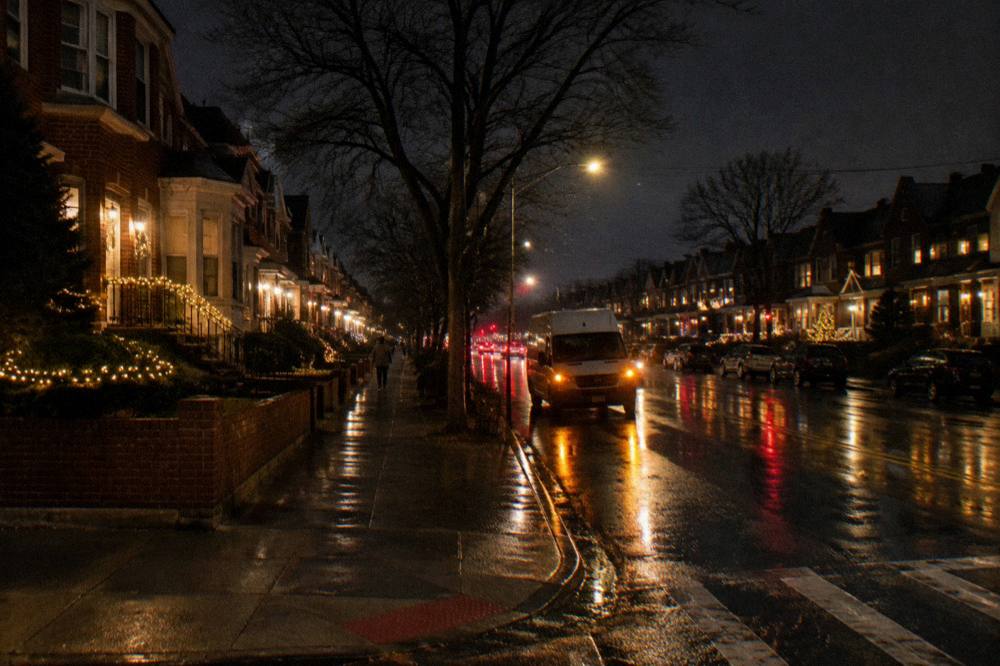
The problem is structural rather than temporary. The display core is a set of narrow residential streets that were never meant to carry December traffic volume, and on mid-December weekends the queues of cars trying to crawl the blocks back up onto the surrounding avenues. Street parking is limited and competitive at the best evening hours, which means a driving visit can spend more minutes hunting a space than walking the lights. Rideshares soften the parking half of the problem and keep the congestion half, and drop-off spots near the core get congested in exactly the peak windows the timing section warns about.
There is one honest caveat. No 2026-specific road closures or MTA service changes have been posted in the sources behind this page, so nothing about this season's driving picture is confirmed to be worse than usual. But the standing advice in local coverage is unchanged and unambiguous: heavy evening traffic, limited parking, take the R or the D. The subway recommendation is not transit ideology. It is what the neighborhood's own coverage says every year because the geometry of the streets has not moved.
If you do drive, stack the odds. A weeknight early in December, arriving before dusk, dodges both the weekend volume and the post-5 p.m. rush, and gives you a shot at street parking a few blocks out. Treat anything later or more central as a bonus rather than a plan, and keep the 9 p.m. switch-off in mind, since a parking hunt that eats 45 minutes of a four-hour light window is a bad trade.
What If You Would Rather Stay In Manhattan?
The "4-Hour Lights and Markets Walk" starts from $59, covers Manhattan holiday lights and market stalls, and runs from Columbus Circle to Bryant Park over 4 hours, with a 4.3 rating from 62 reviews. Bryant Park's Winter Village opens October 28, 2026 and runs through February 28, 2027, and entry is free.
Some readers will look at the R train, the walk at the end, and the 9 p.m. switch-off, and conclude that Manhattan's own holiday layer is enough Christmas for one evening. That is a legitimate read, not a failure of nerve, and there is a bookable version of it. The "4-Hour Lights and Markets Walk" departs from the Deutsche Bank Center, the Shops at Columbus Circle main entrance at 10 Columbus Circle, works through Midtown's lights and market stalls, and finishes at Bryant Park. It runs 4 hours, starts from $59, rates 4.3 from 62 reviews, and cancels free up to 24 hours before start.
The endpoint is well chosen, because the Winter Village at Bryant Park is a destination in its own right that season. The official Winter Village site confirms the 2026 season opens October 28, 2026 and runs daily through February 28, 2027, with free entry to the shops and The Lodge; skating needs a paid, timed reservation, with skate rental running roughly $18.72 to $64.48 depending on package and timing. That makes the walk a two-for-one: guided lights en route, and a market you can keep exploring on your own after the guide peels off.
And if your reason for staying in Midtown is that you are building a bigger evening around Rockefeller Center, the plaza's rink opens its 90th anniversary season on October 10, 2026. The venue's own ticketing page lists general admission from $22 for a 60-minute session, with skate rental separate. Skate first, then let a flag-holding guide put you on the right Brooklyn-bound train: it is a workable full December evening, and the two halves of it are booked independently enough that one canceling does not sink the other.
However you assemble the night, the core decision on this page stays the same. The displays are free, the subway is simple, the tours are there for the evenings when simple is not the same as appealing, and the calendar rewards whoever reads it before booking anything.
Common Questions About Getting To Dyker Heights
Where is the Dyker Heights Christmas lights location?
The displays are on public residential streets in southwest Brooklyn, densest roughly from 83rd to 86th Streets between 10th/11th Avenues and 13th Avenue. There is no venue or ticket booth; homeowners decorate independently, so it is a walkable grid rather than an attraction with an address.
How do you get from Manhattan to Dyker Heights by subway?
Take the R train to 86th Street or the D train to 79th Street, then walk 10 to 15 minutes or more to the display core. Both stops land you at the edge of the grid, and the walk in passes lit houses before the densest blocks. The same lines carry you back to Manhattan.
Is it cheaper to take the subway or a tour to Dyker Heights?
The subway is cheaper: the displays are free to walk, so your only mandatory spend is the MTA fare each way. Handled options start from $45 per person for the bus tour with hotel pickup, $69 for the guided walk that rides the subway as a group, and $399 per group of up to 6 for the private tour.
Should you drive to Dyker Heights to see the lights?
Local coverage advises against it. Evening traffic on the residential streets is heavy, street parking is limited and competitive, and no 2026-specific road closure has been posted to plan around. If you must drive, a weeknight early in December before dusk is the least painful version.
How late are the Dyker Heights lights on each night?
Lights typically switch on around dusk, roughly 4:30 to 5 p.m., and many households switch off around 9 p.m. Plan for a four-hour usable window and treat anything after 9 as a bonus. Mid-December weekends between 5 and 9 p.m. are the busiest hours of the season.
How long do the Dyker Heights displays stay up?
Displays typically begin the weekend after Thanksgiving and many stay lit through Christmas into the first week of January, some through January 6. Homeowners set their own schedules, so the density thins gradually rather than stopping on a fixed date. The stretch after Christmas can be quieter than peak weekends.